
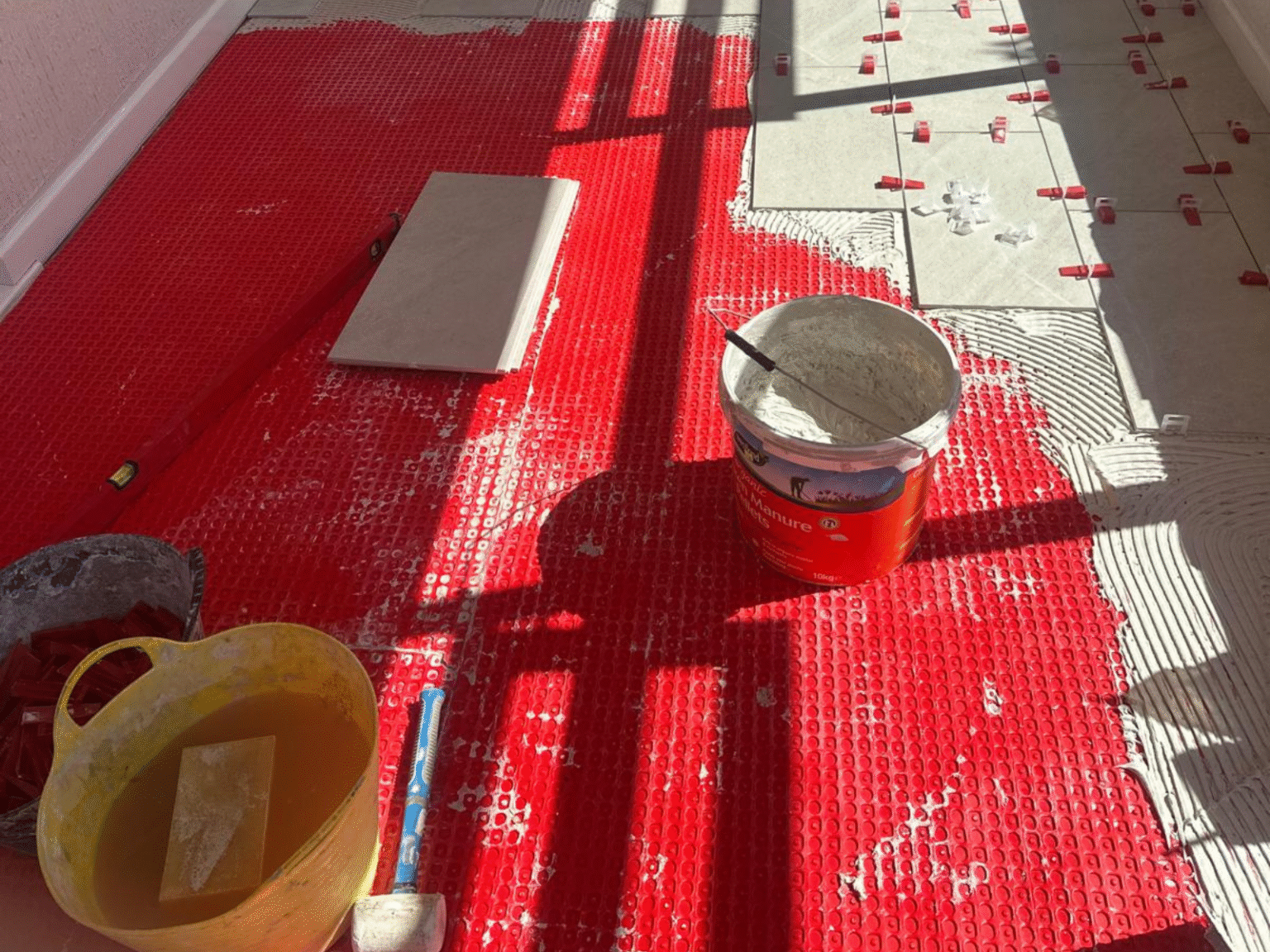
Professional tiling is an art form. When done correctly, it provides a flawless, durable, and waterproof surface that can last for decades. But when done poorly, it’s not just ugly—it can lead to serious problems like water damage, mould, and cracked tiles. With over 25 years in the trade, we’ve seen (and fixed) our share of bad tiling jobs. Here are the key signs to look out for.
The most obvious giveaway is seeing uneven grout lines. Grout lines should be consistent in width and run perfectly straight, both horizontally and vertically. Wavy, uneven, or “jogging” lines show a lack of care and precision, often because the tiler didn’t use spacers or failed to plan the layout properly from the start.
Another clear sign is “lippage,” which is when you run your hand over the surface and feel one tile edge sitting higher or lower than its neighbour. This means the tiler failed to level the surface (the “substrate”) properly before starting or didn’t use a tile-levelling system during installation. It’s not just unsightly; it’s a trip hazard on floors and a weak point on walls.
You should also gently tap on the centre and corners of several tiles. If you hear a high-pitched, hollow sound instead of a solid “thud,” the tile is not fully bonded to the wall or floor. This is a common shortcut where not enough adhesive was used. These hollow tiles are weak, will crack easily under pressure, and will allow water to get behind them, leading to leaks.
Always check the edges and corners. A professional will use a high-quality tile cutter and finishing trims to create a clean, sharp, and safe finish. Sloppy, chipped, or jagged cuts, often hidden with excessive grout or sealant, are hallmarks of an amateur. Similarly, the final silicone sealant should be a single, smooth, and neat bead, not a lumpy, smeared mess.
To avoid a bad tiling job, always check your tiler’s experience and portfolio. Ask them how they will prepare the surface—a true professional will talk about leveling floors and using waterproof backer boards. A quality installer will be proud of their craft, communicate clearly, and take the time to do the job right, providing you with a written quote and a workmanship warranty.